Living in the light
Bound by Darkness“Living in the light” describes the condition of Kalith people who remain in the human world rather than returning to Kalithia. The expression is simultaneously literal, cultural, and political. In the story, light offers Larem q’Jones a healing gift that had faded from his people, yet entering that light also exposes him to suspicion, exile, and the charge that he has betrayed his own kind. The phrase therefore marks not a simple conversion from darkness to goodness, but an unstable life between worlds.
Meaning and Cultural Context
The expression first appears as an accusation. When Larem confronts three Others in the tunnels, their leader declares that they are not his brothers if he “live[s] in the light,” calling him a traitor and defining humanity as sufficient reason to threaten Sasha Willis. In this usage, light is the dividing line between the Others who remain hostile to humans and Kalith people who have entered an alliance with Paladins. It is a language of exclusion: the speaker treats Larem’s new affiliation as evidence that he no longer belongs to his own people.
Larem’s response complicates that judgment. He refuses the charge of treason while insisting that he will not allow the Others to harm Sasha, a human who has done nothing against them. His conduct shows that “living in the light” is not merely a residence or political alignment; it is an ethical position tested under violence. The phrase becomes meaningful because Larem continues to claim responsibility for his people even while opposing those who would attack an innocent person.
Larem’s Exile and Adaptation
Larem embodies the expression’s personal cost. Before crossing into the human world, he had served honorably as a Blademate to a Sworn Guardian and understood his place within Kalith society. After being condemned to execution as a traitor, he accepts a paycheck from the Paladins for teaching weapons practice and regards the arrangement as charity. He hopes eventually to live independently and make his own choices, while sometimes considering a return to Kalithia in the hope that his death sentence might be rescinded.
His new identity depends on careful presentation. At the Paladin headquarters gathering, Devlin Bane approves Larem’s jeans, flannel shirt, and tied-back hair because the clothing helps him blend in with his companions. Larem also softens the beginning of his surname when introducing himself to Sasha, attempting to conceal the prefix that would identify him as Kalith. Later, he avoids escorting her after realizing that she has noticed his accent; he fears that someone connected with the Board of Regents would object to Kalith warriors moving through Paladin facilities without supervision. “Living in the light” thus requires constant management of visibility: Larem must be present enough to participate, but concealed enough to remain safe.
That performance fails when Sasha recognizes him. After he rescues her from the Others, she asks whether he is one of them. Larem understands that she had always been likely to hate him once she discovered what he was, yet he answers that, at that moment, what he is is her way out. The expression’s central tension appears in this exchange: Larem’s Kalith identity is the source of Sasha’s fear, but his life in the human world has also made him the person capable of protecting her.
Light as Loss and Gift
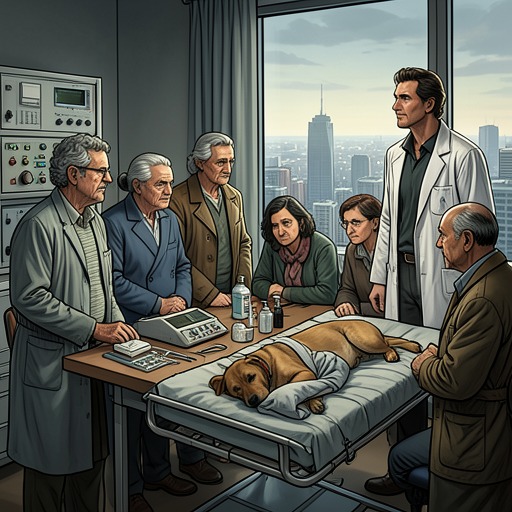
The phrase carries a biological and spiritual dimension through Larem’s healing ability. He explains that his Kalith nature includes a gift lost to his people for generations because of the fading light in Kalithia. Under the brighter sun of the human world, he has become what humans would call a healer. He practices on abused animals at Dr. Isaac’s veterinary clinic, and his help allows Chance to survive severe injuries while also contributing to the animal’s growing ability to trust people again.
The gift reverses the usual moral symbolism of light. The human world is not simply an alien refuge, and Kalithia is not simply a dark or evil homeland. The light restores an ability that Larem’s people have lost, but it does not restore his former place among them. The same condition that gives him new powers also intensifies his separation from the society that formed him.
Larem’s relationship with Lonzo Jones makes this transformation concrete. The two were thrown together by events beyond their control after Lusahn q’Arc chose a human Paladin lover, Cullen Finley. Both Lusahn and Larem were condemned as traitors, and Lonzo was badly injured during the rescue across the Barrier. Larem saved his life; in return, Lonzo offered him a home and the use of his family name on forged paperwork. Their unexpected friendship gives Larem practical shelter and social belonging, but it also underscores how much of his former identity has been replaced by borrowed documents and chosen loyalty.
Conflict, Recognition, and Belonging
The expression becomes a problem shared by all Kalith people who now live among humans. Larem tells Sasha that the difficulty of having friends among former enemies is something all those who live in the light must come to terms with. His statement turns an individual crisis into a collective condition. The Paladins are not merely rescuers or employers; they are the former enemy group with whom Kalith survivors must build daily relationships, while old betrayals and institutional suspicion remain active.
Sasha’s unease shows how fragile that coexistence is. Even after learning Larem’s character through his actions, she continues to distinguish him from the Others and insists that he is not one of them. Her hesitation is protective rather than wholly accepting: she has seen the difference between Larem and the hostile Kalith up close, but the need to name that difference reveals how strongly the category of “Other” still governs their relationship. Larem, aware that she does not see him as one of the Others, offers the word himself and then refuses to let them become closer through an easier lie.
The same danger reaches beyond private intimacy. When guards attack the condo, Larem tells Devlin that the surviving attacker claimed all Kalith were already dead, whether the Kalith knew it or not. He asks that only trusted men protect Sasha and Chaz Willis, warns Devlin to alert Barak q’Young and Cullen, and urges that Lacey Sebastian, Lusahn q’Arc, and the children be taken somewhere safe. Devlin responds by ordering the guards at headquarters confined until their role can be investigated. Here, living in the light offers no guaranteed protection: Kalith-human cooperation remains vulnerable to infiltration, radicalization, and violence from within the human security structure.
Historical Burden and Narrative Significance
Larem’s understanding of the expression is inseparable from the history that forced him into it. Colonel Kincade’s involvement in stealing the blue stones from Kalithia helped destroy Larem’s old life and drove the chain of events that brought him across the Barrier. Larem consequently views Kincade as a monster who played games with lives on both sides. His present work walking a dog and soothing injured animals at Dr. Isaac’s clinic can be satisfying, but it can never reproduce the honor or communal certainty of his former warrior life.
The expression therefore names an unresolved choice rather than a completed settlement. Larem has avoided returning to Kalithia, even though exile and the possibility of execution remain behind him. His attachment to Sasha deepens that decision, particularly after their relationship results in Sasha’s pregnancy, which Larem detects through his healing nature before she has told anyone else. Yet the revelation also makes his difference newly dangerous: when Sasha’s father asks where he is from after noticing his accent, the silence and Larem’s physical dread show that concealment can collapse in an ordinary domestic conversation as easily as in a battlefield.
At its broadest, “living in the light” describes the book’s attempt to imagine coexistence without pretending that coexistence erases history. Larem can save a Paladin’s life, protect a human woman, heal abused animals, and build a home through human friendship while still mourning the world in which he once knew his place. The phrase holds those facts together. Light means possibility, healing, and a future shared with former enemies; it also means exposure, accusation, and the permanent knowledge that belonging on one side of the Barrier may require surrendering certainty on the other.